
Fig 1

Fig 2
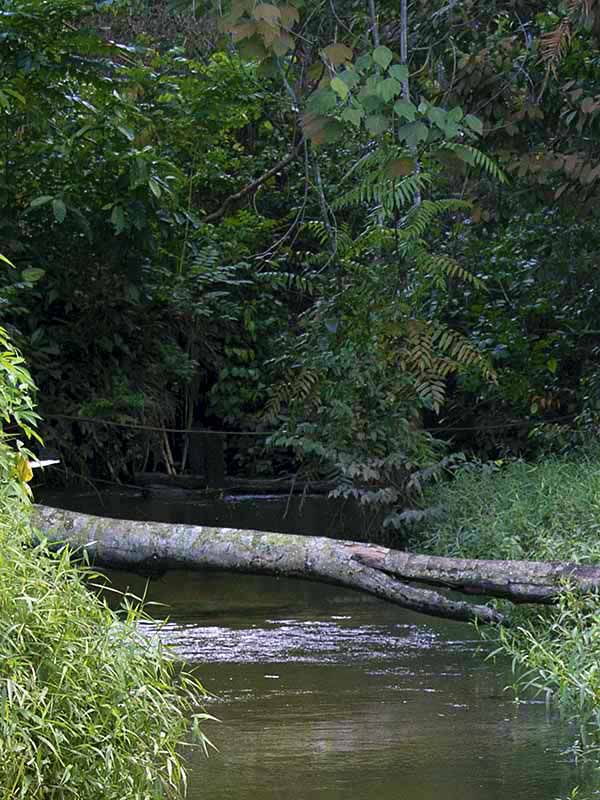
Fig 3
|
Order : Cypriniformes
Family : COBITIDAE
Species : Pangio muraeniformis
Standard Length (excludes tail) : 4.9 cm
(Fishbase 2026)
Pangio muraeniformis (Spotted Eel-loach, Spotted Coolie Loach) inhabits muddy,
slow-flowing streams and pools in freshwater swamp forest. These small fish
are elusive, lying hidden amongst the rotting leaf litter and plant detritus
which contributes to the
substrate of such habitats.
Their body is slender, orange in colour and it bears an irregular pattern of
darker blotches and short, irregular bars. It can be distinguished from similar
species by the dark blotches being 'spotted' rather than 'banded', and by
the three bands across the head, comprising one in front of the eyes and two behind
the eyes (Ho et al, 2016).
Their mouth parts are located ventrally, and there is a pair of short,
stubby barbels; the species is regarded as an omnivore, which feeds
primarily upon small invertebrates and detritus (Ho et al, 2016).
Other species of Pangio are known to be 'facultative air
breathers', which means they can breathe air directly if circumstances
demand it e.g. if the dissolved oxygen in their sometimes stagnant
microhabitat is low (Fishbase, 2026). This is achieved through 'enteral
respiration' where surface air is swallowed and oxygen is absorbed by
the gut as the air passes through the digestive system.
Pangio muraeniformis is known to occur in parts of Peninsular Malaysia
and Singapore. They are also recorded from the Riau Islands, which is an
archipelago immediately south of Singapore and is part of Indonesia.
Other locales, some poorly verified, are also mentioned in online
literature.
Figs 1 and 2 : An example measuring around 5 cm found at the margin of freshwater swamp forest habitat
in Singapore.
Fig 3 : A deeply shaded, slow flowing meander in an acidic, swamp forest stream
can be seen at the rear of this image; forest debris, comprising
decomposing leaves and branches, will accumulate in the inner bend of
such meanders, providing a suitable microhabitat for
Pangio muraeniformis.
References :
Ho Jonathan K. I., Sorain J. Ramchunder, Andrew Memory, Meryl Theng, Li
Tianjiao, Esther Clews, Cai Yixiong, Tan Heok Hui & Darren C. J. Yeo. (2016). A
Guide to the Freshwater Fauna of Nee Soon Swamp
Forest. Singapore: Lee Kong Chian Natural History Museum & Tropical Marine
Science Institute, National University of Singapore. 139 pp.
Fishbase - Pangio muraeniformis
|


